

Unitless Measures: When Not to Include a Unit
by Laura Miske, Manuscript Editor III, Radiology
When you prepare your manuscript, it’s imperative to report data with the proper units of measure. Previously, we covered
But there are also parameters that don’t take a unit label – some of which may surprise you.
Ratios
Signal to noise ratio, contrast to noise ratio, hazard ratios, and odds ratios commonly appear in the imaging literature. They are expressed as standalone numbers without a unit. Bonus tip: In journal style, countable ratios, such as the ratio of male to female participants included in a study, can be expressed with a colon between the two numbers (eg, male:female ratio, 2:1).
Indexes
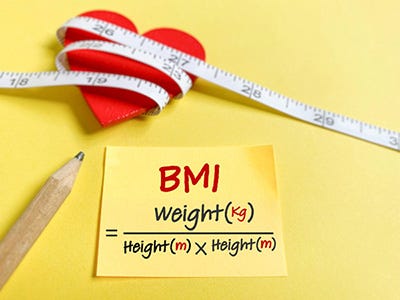
Indexes are typically derived from ratios. Even common indexes, like body mass index (BMI) and cardiac index, should have their formula defined at first use in accordance with AMA Manual of Style guidelines. After that, numeric values for the index can be reported without a unit attached. For example, a definition for BMI may be “BMI was calculated as patient weight in kilograms divided by patient height in meters squared.” This describes the formula and the units used for each term in the formula. Often in the literature, the formula is used as the index unit as a shortcut, but the best practice is to define the formula. This is especially helpful for indexes like cardiac index, where one of the terms (ie, cardiac output) is itself derived from another formula.
All indexes, even widespread ones, should be defined this way in your manuscript, or alternatively, a reference that defines the index may be provided (the latter is typically the case with indexes used in statistical analysis, such as the Harrell concordance index). This allows readers to understand how the index is calculated and what units are used for its terms. For example, for BMI, patient height and weight are typically measured in the metric units of meters and kilograms, respectively; however, if these were recorded in the electronic health record as inches and pounds, the formula for BMI would differ.
Note: An exception is the volume CT dose index (CTDIvol), which carries a unit of milligrays (mGy).
Standardized Uptake Value
In PET and SPECT imaging, standardized uptake value (SUV) refers to the amount of radiotracer in a region of interest. SUV itself is a ratio of image-derived radioactivity concentration (typically in megabecquerels per milliliter) divided by the whole-body concentration of the injected radioactivity (in megabecquerels per gram or equivalent). Other derived statistics, such as maximum SUV and mean SUV (often written as SUVmax and SUVmean), are also unitless.
Relative Cerebral Blood Volume
This parameter, often simply referred to as CBV, is related to CT perfusion and MR perfusion. It is the measure of the volume of blood in a given amount of brain tissue, commonly milliliters per 100 g of brain tissue. Since it’s a ratio, it doesn’t take a unit.
Matrix Size
In digital imaging modalities, matrix size is a way to denote the spatial resolution of an image. Matrix size is based on the number of pixels, but no unit is used when providing this parameter in imaging protocols (eg, matrix size, 1024 × 1024).
Optical Density
Optical density refers to the transmission of light through a filter and the ability of that filter to block light. More specifically, in radiography, a high optical density means that more x-ray photons are transmitted through the tissue (ie, the filter), resulting in a greater degree of film darkening. On most radiography machines, optical density ranges from −3 to 3. In addition, the result of the heparin-induced thrombocytopenia test is optical density.
Visual Acuity
While not common in imaging research, visual acuity is another parameter that doesn’t take a unit in the medical literature. However, the numbers can refer to feet or meters, with 20/20 being considered “normal” vision when measured in feet and 6/6 for meters. If the first number in the construction is 20, then it’s referring to feet, whereas if the first number is 6, then it’s meters. Therefore, it’s not necessary to add a unit.
Coefficients and Other Statistical Measures
Correlation coefficient, coefficient of variation, z-score, and effect size are other measures that may appear in the radiology literature that don’t have units.